

You’re doing the hard thing, living sober.
And even if you know it’s the right thing, it can still feel like you’re watching life from the outside. Like everyone else got the rulebook for how to be cool, connected, and confident and you’re stuck scribbling in the margins.
That’s where DBT (Dialectical Behavior Therapy) comes in. It’s not about changing who you are, it’s about giving you tools to reconnect with the real you underneath the overthinking, people-pleasing, or panicking. Let’s break down six DBT skills that don’t just “help” they help you come home to yourself.
(P.S. You can learn more about how DBT works here. It’s not just for crisis mode.)
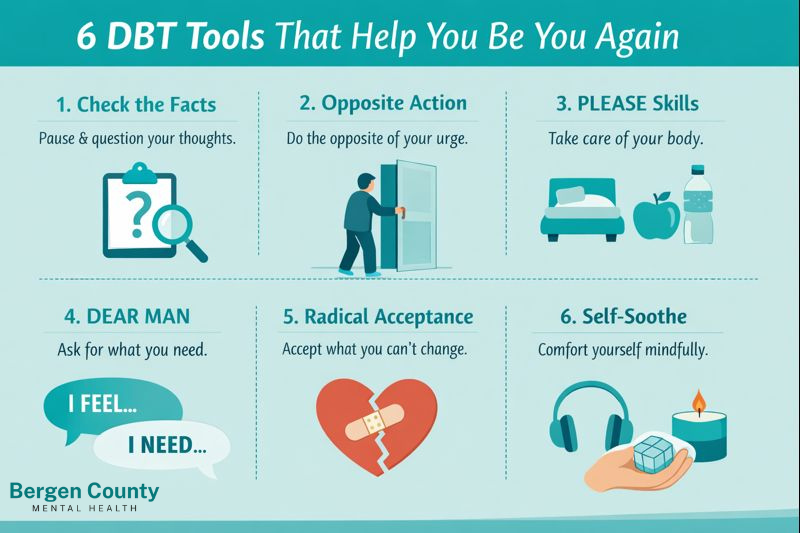
1. Check the Facts (When Your Brain Starts Spiraling)
Ever caught yourself spiraling over something tiny, like a short text or a weird glance and convinced it definitely means someone’s mad at you? Yeah, same.
“Check the Facts” is a DBT skill that helps you pause and ask:
What actually happened—and what am I assuming?
It’s like a reality-check buddy in your pocket. It doesn’t invalidate your feelings, it just helps you fact-check your fear.
2. Opposite Action (For When You Want to Ghost Everything)
Sometimes, the most healing thing is doing the exact opposite of what your anxiety wants.
Feel like hiding from everyone? Try texting one friend.
Want to cancel plans (again)? Try showing up for 10 minutes.
Opposite Action doesn’t mean faking it. It means trusting that showing up might make you feel better, even if your brain is yelling, “Nope.” And over time, this kind of practice is a core part of addressing the anxiety treatment root causes, not just the surface-level symptoms.
3. PLEASE Skills (Because Your Body Affects Your Mood, Even if You Hate Hearing That)
DBT’s PLEASE skills are basic but not boring. They’re about treating your body like it matters:
- Physical illness → Get it checked out
- Low sleep → Prioritize rest
- Eating → Fuel, not perfection
- Avoid drugs/alcohol → You already are (hell yeah)
- Self-care → Move, shower, breathe
When you’re in early recovery, your body might feel like a stranger. These skills help you start making peace with it.
4. DEAR MAN (For Getting What You Need Without Feeling Like a Jerk)
Ever freeze up when it’s time to set a boundary? Or feel guilty just asking for space or respect?
DEAR MAN is a DBT script that helps you speak up without self-destructing.
It teaches you how to:
- Describe the situation
- Express how you feel
- Assert your need
- Reinforce why it matters
- (And still keep your cool)
Think of it as boundary-setting for people who still care what others think. (AKA: most of us.)
5. Radical Acceptance (Even When You Hate the Situation)
Some stuff just sucks. That party where everyone’s drinking. The old friend who doesn’t get why you’re sober. The loneliness you didn’t expect.
Radical Acceptance doesn’t mean you like it, it means you stop fighting reality with all your energy.
It sounds harsh. But it’s actually freeing. Because once you stop saying, “This shouldn’t be happening,” you can start asking, “What can I do with what is?”
6. Self-Soothe (That Doesn’t Involve Scrolling for 3 Hours)
When you’re sober, you lose a lot of your old go-to coping tools. DBT helps you rebuild a real self-soothing toolbox:
- Music that makes you feel human
- Weighted blankets, candles, movement
- Holding an ice cube or splashing cold water when you feel numb
You’re not weak for needing comfort. You’re human for learning new ways to give it to yourself.
You Don’t Have to Fake “Fine” Anymore
Feeling like the “weird one” in early sobriety doesn’t mean something’s wrong with you. It means you’re in the in-between the awkward but powerful space where real change is happening. DBT can help you feel like yourself again. Not the old you, just the you who’s been waiting underneath the noise.
If you’re ready to try these tools with real support, there’s help in Reclaim Your Mental Health Journey and support in New Jersey for young people figuring out life, sober.
📞 Ready to talk it out?
Call (201) 389-9208 or visit this page to learn more about our DBT services in Bergen County.