


You’ve been holding it together for so long that you’re not even sure what “not holding it together” looks like anymore. Maybe you got here slowly — a missed night’s sleep here, a moment of unease there — until one day the quiet tension became too loud to ignore. Or maybe anxiety showed up suddenly, like static that flips on without warning. Either way, it’s real. And it matters.
If you’re considering your first experience with anxiety treatment, you’re already taking a brave step forward. You may not feel broken. You may not have a dramatic crisis story. But you feel something you can’t shrug off. That’s more than valid — it’s human.
At Bergen County Mental Health, we help people just like you understand what their first steps look like, how it feels in real time, and what purpose it serves. This article is your gentle guide to that process — practical, reassuring, honest.
What Brings People to Their First Anxiety Treatment Appointment?
There’s no single path that leads someone into treatment. Sometimes it’s:
- When everyday stress stops feeling manageable
- When worry feels heavier than joy
- When rest doesn’t actually soothe
- When avoidance becomes a habit
- When it feels like your nervous system is on alert even when nothing is wrong
It’s not always a crisis. Oftentimes it’s a quiet fatigue of the soul — the kind that shows up as inner tension, emotional reactivity, or a persistent sense that you’re running just to stay in place.
Anxiety treatment is for people who want more than just survival. It’s for those who want understanding, not just distraction—and for many, especially those balancing careers and responsibilities, anxiety treatment for high functioning adults offers support that fits into real life without requiring everything to stop.
The First Appointment: What It Really Feels Like
Walking into your first anxiety treatment session might feel like showing up to a meeting you haven’t fully prepared for. That’s normal. You might wonder:
- What will they ask me?
- Do I have to cry?
- Will they judge me?
Here’s the reality: your clinician is not waiting to grade you. They’re waiting to hear you.
Most first sessions focus on understanding your experience — nothing else. You might talk about:
- What anxiety feels like for you
- When you first noticed it
- How it shows up in your body
- How it impacts your relationships or work
- What you hope is different
There’s no pressure to have every answer. No right language you must use. Just honesty. And that’s enough.
For many, the first session brings an unexpected relief: someone is finally listening without minimizing, quick solutions, or dismissive platitudes.
The Assessment Isn’t a Test — It’s a Map
One of the biggest misconceptions about anxiety treatment is that it starts with a diagnosis or a label. It doesn’t—especially when you understand what to expect in anxiety treatment from the very beginning.
Your clinician is building a map — not a judgement.
This map includes:
- Patterns in your thoughts
- How your body responds to stress
- Situations that trigger anxiety
- Ways you cope (healthy and less helpful ones)
- What you want your life to feel like
Instead of “What’s wrong with you?” the real question is: “What’s happening inside you?”
Once you have that map, you can begin to navigate your inner world with intention — not fear.
What Anxiety Treatment Helps You Learn
Anxiety treatment is not just talking. It’s learning — practical, applicable, real.
Here’s what many people begin to understand through treatment:
Tools to Calm the Nervous System
Anxiety lives in your body before it lands in your mind.
You might notice:
- Rapid heartbeat
- Tight muscles
- Shallow breathing
- Restlessness
A clinician helps you learn how to regulate these sensations before they escalate into panic or fear.
Skills to Notice Thoughts Without Being Ruled by Them
Instead of thinking:
“This anxiety is me,”
you begin to see:
“This is a pattern my mind learned somewhere along the way.”
That’s distinction. And it’s freedom.
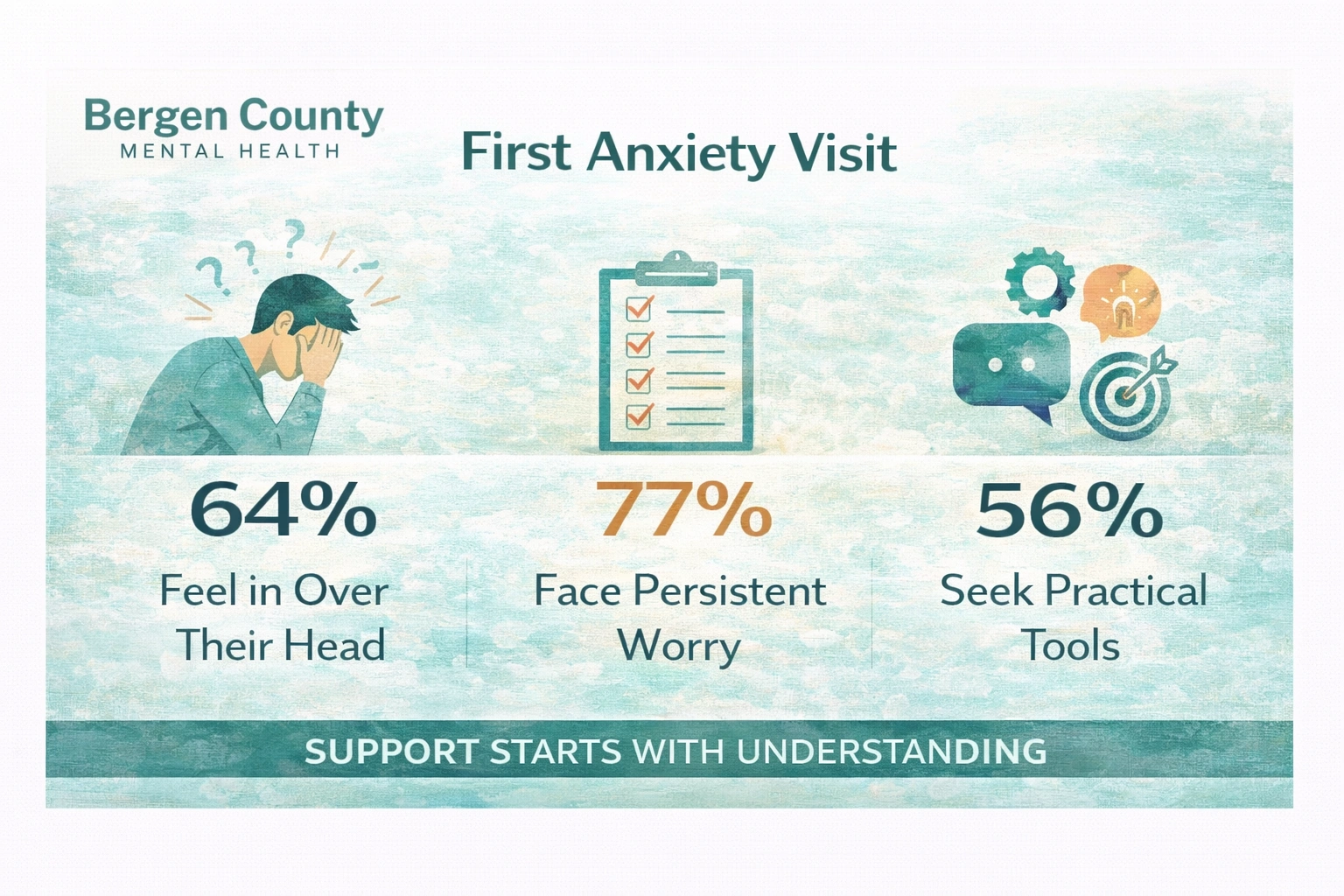
Strategies That Work in Everyday Life
Not every technique helps every person — but you’ll find tools that fit you. That can include:
- Grounding exercises
- Breath regulation
- Cognitive reframing
- Behavioral experiments
- Emotional awareness practices
These aren’t “one‑size‑fits‑all” prescriptions. They’re personalized choices.
You Don’t Need a Breakdown to Start Healing
Something gentle but powerful that most first‑time treatment seekers don’t realize:
You don’t have to be at the worst moment of your life to deserve help.
Anxiety treatment is not a crisis intervention. It’s an enrichment, a support system, a companion on your inner journey.
People start for all kinds of reasons:
- “I want help before it gets worse.”
- “I feel like I shouldn’t have to struggle this much.”
- “I don’t want to use alcohol or habits to cope anymore.”
- “I want to enjoy life again.”
- “I just want clarity.”
Those are valid entrances.
Your narrative doesn’t have to be dramatic. It just has to be honest.
What Happens After a Few Sessions
No — your life won’t flip overnight. But you might notice:
- A sense of less tension in your body
- Less reactivity to stress
- More awareness of patterns
- More confidence in your choices
- A lighter relationship with your thoughts
You begin building a relationship with yourself rather than running from your inner world.
Treatment helps contain emotions instead of letting them hijack your experience.
It’s like learning to sit with discomfort — not being engulfed by it.
Addressing Fears About Treatment
It’s normal to fear:
- “Will this make me feel worse before I feel better?”
Sometimes — short discomfort can happen as old habits are unmasked. But that’s part of healing, not evidence that you’re broken. - “What if they think I don’t need help?”
Nothing could be further from the truth. Anxiety treatment isn’t for extremes only. It’s for anyone who wants deeper ease. - “Do I have to dig into my past?”
Only if you want to. Treatment is paced by your readiness, not urgency.
The first step is not surrender. It’s awareness.
And that awareness doesn’t shrink you — it strengthens you.
Real Change Comes With Connection
Anxiety is not a solo experience. It’s a human experience.
You might feel alone in your thoughts — like no one else experiences this. But talking to someone trained to understand how anxiety works changes the internal narrative.
It’s like discovering you’ve been trying to read in the dark — and someone finally hands you a light.
You begin to see:
- What your nervous system has been doing
- What emotions have been trying to get your attention
- What patterns keep repeating on autopilot
- What choices feel like you, not like fear
Connection isn’t just external support. It’s a way of organizing your inner world so it feels less chaotic.
A Simple Metaphor: Your Mind Is Like a Room
Imagine your mind like a room with old furniture:
Some pieces are comfortable.
Some are bulky and outdated.
Some are just in the way.
Anxiety treatment is like someone helping you reorganize the room — one piece at a time.
You don’t throw everything out.
You don’t demolish the walls.
You understand why certain pieces ended up there.
And then you figure out what needs to stay, what can shift, what’s no longer helpful.
That’s not erasing your story.
That’s making space for your life.
You Don’t Have to Walk This Path Alone
No matter how internal your anxiety feels, it’s not meant to be managed on your own.
There’s no shame in wanting support. There’s wisdom in asking for it.
Call (201) 389-9208 to learn more about our Anxiety Treatment in Bergen County, New Jersey.
You don’t have to wait for a breaking point.
You just have to take the step toward understanding.
FAQs About Your First Anxiety Treatment Experience
1. What happens in the first session?
Your first session is a conversation, not a test. A clinician asks about your experience, listens deeply, and begins building a tailored understanding of your anxiety — without judgment.
2. Will I have to talk about everything painful?
No. You share what you’re comfortable with. Treatment is paced by your readiness, not pressure. The goal is to help you feel safe and understood, not exposed.
3. Is anxiety treatment just talking?
Talking is part of it, but it’s accompanied by practical tools — breathing, grounding, cognitive strategies, emotional regulation, and real‑world skills tailored to your life.
4. How soon will I notice a difference?
Some people notice small shifts early — especially in awareness and nervous system regulation. Deep and lasting change grows with consistent practice and support.
5. Is it weird to get help if I’m “functioning”?
Not at all. Many people seek anxiety treatment while holding jobs, relationships, and responsibilities. Functioning doesn’t mean absence of struggle — it often means compensating for it.