


You don’t need a full life reset to feel better. Sometimes, the pressure to “do everything right” is what keeps you stuck. If you’re curious about feeling more grounded—but not ready to overhaul your entire routine—this is a gentler place to begin.
If you’ve been quietly exploring support like mental health treatment options, you’re already further along than you think.
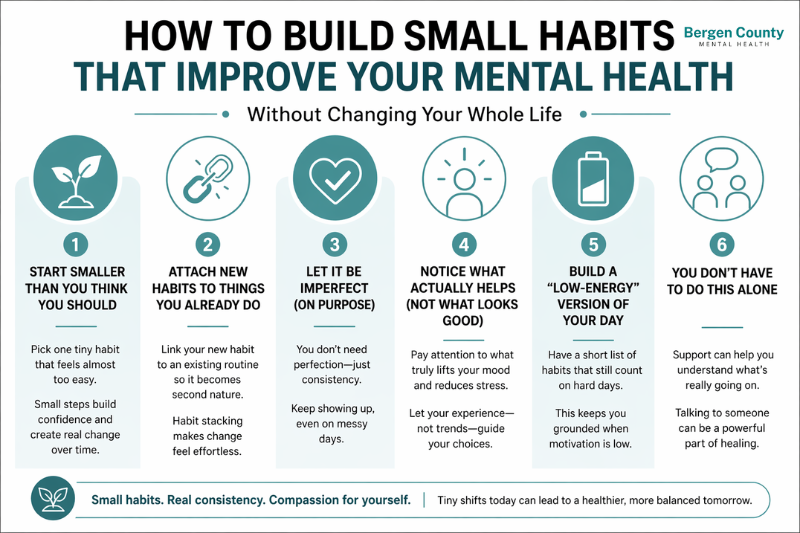
Start Smaller Than You Think You Should
Most people aim too big at the beginning. Hour-long morning routines, daily journaling, cutting out every bad habit overnight.
It sounds good. It rarely sticks.
When emotional overwhelm starts affecting your daily life, it can help to start understanding serious mental health warning signs before trying to change everything at once.
Instead, try this: pick something that feels almost too easy.
Drink a glass of water before coffee.
Step outside for two minutes.
Pause before reacting.
Small habits don’t look impressive—but they build trust with yourself. And that matters more than intensity.
Attach New Habits to Things You Already Do
You don’t need more time. You need better placement.
Think of your day like a series of anchors:
- Brushing your teeth
- Opening your laptop
- Getting into bed
Now, attach a small habit to one of those moments.
Take three slow breaths after brushing your teeth.
Stretch your shoulders before opening your laptop.
Name one thing you did okay before bed.
Small, repeatable changes matter—especially when you’re working through the myth of i should be past this by now and trying to rebuild trust with yourself gradually.
This is how habits become automatic—by slipping into routines that already exist.
Let It Be Imperfect (On Purpose)
There’s a quiet kind of burnout that comes from trying to do self-care “correctly.”
You miss a day. Then another. Suddenly it feels like you failed.
You didn’t.
Over time, this kind of self-awareness can also help people understand how anxiety treatment reveals root of behavior instead of only focusing on surface-level habits.
Consistency isn’t about perfection. It’s about returning—without making it a big deal.
A habit that happens 4 times a week for a year will change you more than one that lasts 10 perfect days and disappears.
Notice What Actually Helps (Not What Looks Good)
Some habits are trendy. Some are helpful. They’re not always the same.
Instead of asking, “What should I be doing?”
Ask, “What actually makes me feel a little better?”
That might be:
- Walking without your phone
- Listening to music in the car without rushing
- Saying no without explaining yourself
Pay attention to what shifts your mood—even slightly. That’s your starting point.
Build a “Low-Energy” Version of Your Day
Not every day will be productive. Some days, even basic things feel heavy.
Plan for that version of yourself, too.
Create a short list of habits that still count on hard days:
- Drink water
- Step outside
- Text one person
- Sit quietly for a minute
This isn’t giving up. It’s staying in the game.
You Don’t Have to Do This Alone
At some point, small habits open the door to bigger questions.
Why do I feel like this?
Why is it so hard to slow down?
Why do I keep burning out?
That’s where support can help—not by taking over your life, but by helping you understand it.
If you’ve been looking into outpatient therapy Bergen County options, you’re not overreacting. You’re responding.
And there’s real value in having someone walk through this with you.
A Different Way to Think About Change
You don’t need to become a different person.
You just need to build a life that feels a little more manageable, one small shift at a time.
Some days will feel easier. Some won’t. That doesn’t mean it’s not working.
It means you’re human.
If you’re ready to explore more structured support alongside these small changes, you can find thoughtful, flexible help in New Jersey.
Call (201) 389-9208 or visit to learn more about our mental health services in New Jersey.