


You don’t have to hit a breaking point to want something to feel different. Sometimes it’s quieter than that—just a sense that your mind could feel lighter than it does right now.
If you’ve been thinking about a reset, not a reinvention, this is a place to start. And if you’re already exploring support, you can learn more about mental health services in New Jersey that meet you where you are.
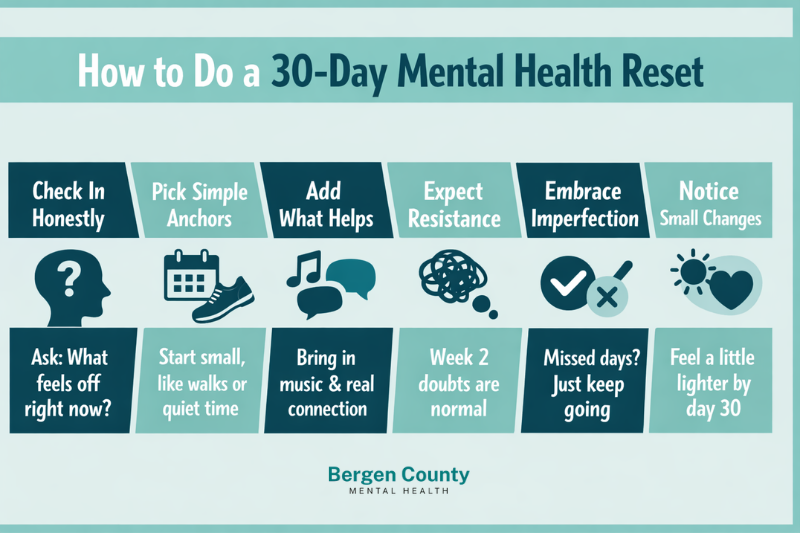
Start With One Honest Check-In
Before you change anything, pause.
Ask yourself: What actually feels off right now? Not what you “should” fix—just what feels heavy.
Maybe it’s your sleep. Your focus. The way your thoughts spiral late at night.
You don’t need a label. You just need awareness.
That alone can be a quiet turning point.
Pick a Few Anchors—Not a Whole New Life
A 30-day reset doesn’t mean rebuilding everything at once. That’s where people burn out.
Instead, choose 2–3 simple anchors:
- A consistent wake-up time
- A short daily walk
- 10 minutes of silence (no phone, no noise)
That’s it.
Think of these as “mental bookmarks”—small places your mind can return to, even on messy days.
Pay Attention to What You Add (Not Just What You Remove)
A lot of reset advice focuses on cutting things out. Less scrolling, less sugar, less stress.
But what you add matters just as much.
Try introducing:
- Music that actually shifts your mood
- Conversations that feel real (even if they’re short)
- Moments where you’re not performing for anyone
One person I know didn’t change much except adding a 15-minute walk after dinner.
They said it was the first time in months their thoughts felt… quieter.
That’s not small. That’s momentum.
For many people, especially those exploring how anxiety treatment helps high functioning adults, small consistent changes become the first real signal that recovery is starting to feel possible.
Expect Resistance Around Week Two
This part surprises people.
The first few days feel motivating. Then somewhere around week two, your brain pushes back.
You might think:
- This isn’t working
- I’m still tired
- What’s the point?
That doesn’t mean you’re failing. It usually means you’re disrupting patterns that have been running for a long time.
Stay gentle here. Not perfect—just consistent enough to keep going.
Let It Be Imperfect (That’s the Point)
Missing a day doesn’t undo anything.
In fact, part of a real reset is learning that you can come back without starting over completely.
That’s a different relationship with yourself.
Less pressure. More trust.
And honestly, that shift alone can change how your mental health feels day to day.
Notice What Feels Different—Even Slightly
By the end of 30 days, you might not feel like a new person.
But you might notice:
- Your thoughts don’t spiral as fast
- You recover quicker from bad days
- You feel a little more present in your own life
Those are real changes. For many people, noticing these shifts becomes part of understanding what it means to come back to consistent mental health support before stress becomes overwhelming.
And sometimes, they’re the doorway to deeper support—whether that’s therapy, structure, or exploring options like depression treatment Bergen County residents often look into when things feel heavier than they expected.
You Don’t Have to Figure It Out Alone
A 30-day reset can show you what’s possible. For many people, building on that progress with tools like 6 dbt tools that help you be you again helps turn short-term changes into lasting emotional stability. It can also show you where you might need more support.
If you’re starting to realize you want guidance, structure, or just someone to talk to, there are real, human options available—not just routines you try to manage on your own.
You can explore treatment options in New Jersey that fit your life, your pace, and your needs.
Ready to Take the Next Step?
You don’t need a label to deserve support. You just need a moment where you decide things could feel better than they do right now.
Call (201) 389-9208 or visit mental health services in New Jersey to learn more about your options.
Even a small step can change more than you think.