


There’s a specific kind of panic that shows up before sunrise. Your eyes open, your chest tightens, and for a few seconds, you forget where you are. Then it hits you: work. Responsibilities. Expectations. Another day of pretending you’re okay.
For a lot of people in New Jersey, this doesn’t feel dramatic enough to “count” as a mental health struggle. It just feels like survival. But if your mornings are starting with dread, your nervous system may be asking for help in a language your mind hasn’t fully translated yet.
Sometimes, support starts with understanding what your body has been trying to say all along. That’s why many people eventually explore options like structured daytime care when the pressure of functioning alone becomes too heavy.
Your Body Might Be Waking Up Before Your Mind Does
A lot of people describe it the same way:
“I’m fine at night. Then morning comes, and it feels like I’m being dropped into cold water.”
That reaction can feel confusing, especially if you’re still getting up, going to work, answering emails, and keeping your life moving from the outside. But the body keeps score of stress, even when your personality tries to outrun it.
Early-morning cortisol spikes are normal. Your body naturally releases stress hormones to wake you up. But if you’re burned out, emotionally overwhelmed, carrying unresolved anxiety, or living in a constant state of internal pressure, that morning surge can feel less like waking up and more like bracing for impact.
That’s often where morning panic attacks begin — not because you’re weak, but because your nervous system has been overloaded for too long.
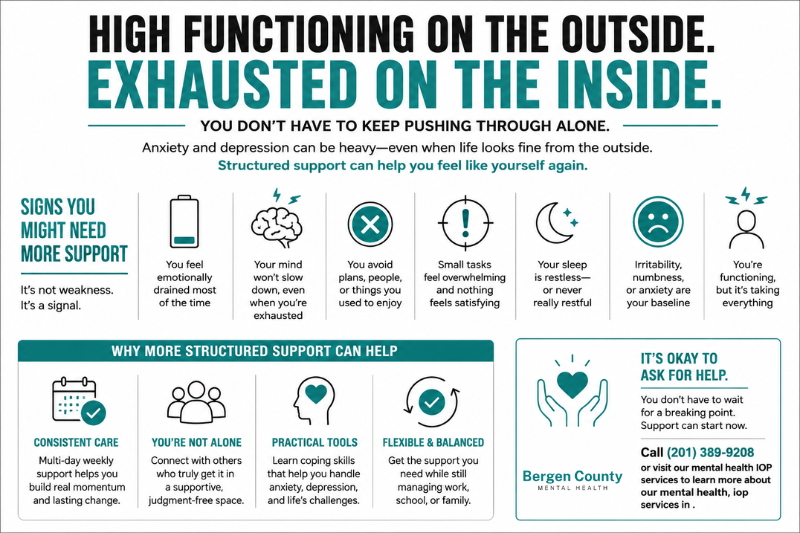
High-Functioning Doesn’t Mean You’re Okay
One of the hardest parts about this kind of anxiety is how invisible it can be.
You may still be productive. People may still rely on you. You may even joke around at work while silently counting the hours until you can go home and collapse.
But functioning isn’t the same thing as feeling safe inside your own body.
We talk to many people throughout New Jersey who feel deeply ashamed because their life “looks fine.” They think panic should only happen after a crisis. Instead, it’s happening while sitting in traffic, brushing their teeth, or staring at their work badge before walking into the office.
That disconnect can make people question themselves even more.
Like maybe they’re dramatic.
Maybe lazy.
Maybe just “bad at stress.”
Usually, they’re exhausted.
The Fear Often Isn’t About Work Alone
Work may be the trigger. But it’s not always the root.
Sometimes the panic is tied to perfectionism that never turns off. Sometimes it’s unresolved grief, trauma, depression, or emotional burnout that has quietly built over years. Sometimes it’s the loneliness of feeling emotionally disconnected while still showing up for everyone else.
And sometimes, people wake up panicking because work is the one place they can’t hide how depleted they’ve become.
There’s a moment many people reach where even answering one more email feels impossible. Not because they don’t care — because their system has stopped believing rest is coming.
That kind of anxiety can make mornings feel unbearable.
You Don’t Have to “Crash Completely” Before Getting Help
A lot of alumni and returning clients carry this quiet thought:
“I should be able to handle this on my own by now.”
That mindset keeps people suffering longer than they need to.
Needing support again doesn’t erase your progress. It doesn’t mean you failed. It means you’re human enough to notice something isn’t sustainable anymore.
Sometimes healing isn’t a straight line. Sometimes it looks more like relearning how to breathe without your shoulders locked up around your ears.
For people struggling with persistent anxiety, depression, emotional shutdown, or recurring morning panic attacks, more consistent support can help stabilize what everyday life has started to wear down.
Small Signs Your Nervous System May Need More Support
You don’t need to be in complete crisis to deserve care.
Some quieter signs include:
- Feeling dread immediately after waking up
- Calling out of work because your anxiety feels physical
- Crying in private but acting normal in public
- Constant stomach tension, chest tightness, or racing thoughts
- Feeling emotionally numb by the end of the day
- Fantasizing about disappearing just to finally rest
One of the cruel things about anxiety is that it convinces people they’re overreacting while they’re actively drowning.
There’s a Difference Between Pushing Through and Healing
For a while, pushing through can look impressive from the outside.
Then eventually, your body starts sending louder messages.
Panic in the morning is often one of them.
At Bergen County Mental Health, we work with people who are tired of surviving every weekday like it’s an emergency. Some need therapy. Some need medication support. Some benefit from more immersive, multi-day weekly treatment that gives them space to stabilize without disappearing from their entire life.
And some simply need someone to say: “This sounds hard. You’re not crazy for struggling with it.”
That matters more than people think.
If you’ve been carrying this alone, there is compassionate care in New Jersey that can help you slow the cycle down and feel grounded again.
Fear has a way of shrinking your world slowly. First your mornings. Then your sleep. Then your ability to imagine things getting better.
But anxiety is not always a life sentence. Sometimes it’s a signal that your mind and body need a different kind of support than white-knuckling your way through another workweek.
Call (201) 389-9208 or visit our mental health, php services to learn more about our care options in New Jersey.