


Panic attacks can feel so overwhelming that relief becomes the only thing that matters. In those moments, a drink, a pill, or any quick escape can seem like the fastest way to make the fear stop.
If you’ve found yourself searching for answers after a frightening episode, you’re not alone. Many people who experience panic attacks turn to substances not because they want to, but because they desperately want the feeling to end. The good news is that there are safer, more effective ways to find relief. Our Anxiety Treatment services are designed to help people understand what’s happening and build tools that actually work long term.
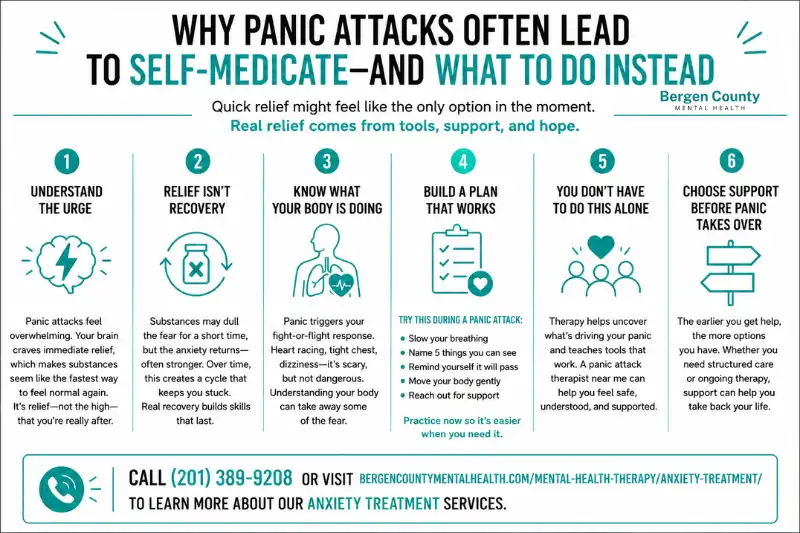
Understand Why Self-Medication Feels So Tempting
A panic attack can convince you that something is seriously wrong.
Your heart races. Your chest tightens. Your thoughts spiral. Some people feel dizzy, detached, or certain they’re about to lose control. When your nervous system sounds that alarm, your brain naturally starts searching for an immediate off switch.
That’s why self-medication is so common. It’s often less about getting high and more about trying to feel normal again.
The problem is that quick relief can create a cycle. The brain begins associating substances with safety, making it harder to develop healthy coping skills when panic returns.
Recognize the Difference Between Relief and Recovery
Relief and recovery are not the same thing.
A substance may temporarily dull anxiety symptoms. But when the effects wear off, the underlying fear is still there. In many cases, anxiety returns stronger because the body has never learned how to move through the panic naturally.
Think of panic like a wave. Self-medication can feel like trying to hold the wave down with your hands. It might work briefly, but eventually the pressure pushes back harder.
Recovery involves learning how to ride the wave instead of fighting it.
Learn What Your Body Is Actually Doing
One of the most powerful things you can do is understand what’s happening during a panic attack.
Panic attacks trigger the body’s fight-or-flight response. Adrenaline floods your system. Your breathing changes. Your heart beats faster. Your muscles tense in preparation for danger.
The sensations are real, but they are not usually dangerous.
Many people begin to feel less afraid of panic once they understand that their body is responding to a false alarm rather than a true emergency. That shift alone can reduce the intensity of future episodes.
Create a Panic Response Plan Before You Need It
Trying to figure out what to do during a panic attack can be difficult because panic makes clear thinking harder.
Instead, create a simple plan ahead of time.
Quick Tips for Managing a Panic Attack
- Slow your breathing by exhaling longer than you inhale.
- Name five things you can see around you.
- Remind yourself that panic attacks pass, even when they feel endless.
- Move your body gently by walking or stretching.
- Reach out to a trusted person if you need support.
Having these steps written down on your phone can make them easier to access when anxiety spikes.
Stop Facing Panic Alone
Many people spend months or even years trying to manage panic attacks by themselves.
Some become experts at hiding their anxiety. They still go to work, show up for friends, and handle responsibilities while privately fearing the next attack.
You don’t have to carry that burden alone.
Working with a mental health professional can help uncover the patterns driving panic and teach practical strategies for reducing its impact. If you’ve ever searched for a panic attack therapist near me, what you’re really looking for may be reassurance that someone understands what you’re experiencing and knows how to help.
Explore Support Before Anxiety Starts Running Your Life
Panic attacks have a way of shrinking a person’s world.
People begin avoiding places, situations, or experiences they associate with anxiety. Over time, life can start revolving around preventing the next episode rather than enjoying the present moment.
Seeking support early can help prevent that pattern from becoming more entrenched. For individuals who need additional structure, there are different levels of mental health care and treatment options in New Jersey that can provide more intensive support when anxiety becomes difficult to manage alone.
Others may benefit from ongoing therapy and support in New Jersey that allows them to continue working, attending school, and maintaining daily responsibilities while receiving care.
You Don’t Have to White-Knuckle Your Way Through This
Panic attacks can make people feel trapped, broken, or out of control. But panic is treatable, and needing help is not a sign of weakness.
The goal isn’t to never feel anxious again. The goal is to stop letting anxiety make decisions for you.
If you’ve been relying on self-medication, or you’ve been living in fear of the next panic attack, know that there are healthier paths forward.
Call (201) 389-9208 or visit our Anxiety Treatment services to learn more about our Anxiety Treatment services.