


There’s a specific kind of exhaustion that comes from watching someone you love disappear in slow motion. Not dramatically. Quietly. Sleeping all day. Canceling plans. Saying “I’m fine” in a voice that clearly isn’t.
And somewhere between fear and late-night Googling, many parents end up searching for answers about structured daytime support and wondering what’s realistic financially, emotionally, and logistically. If that’s where you are right now, it may help to know there are options beyond waiting for things to get worse. Programs like structured mental health support are designed for people who need more than weekly therapy but don’t need overnight care.
The Question Most Parents Ask First Isn’t About Therapy
It’s usually:
“How many hours is this going to take?”
Or:
“How much is this going to cost us?”
That’s not shallow. It’s survival thinking. Parents are often trying to hold together work schedules, insurance calls, transportation, younger siblings, and their own fear at the same time.
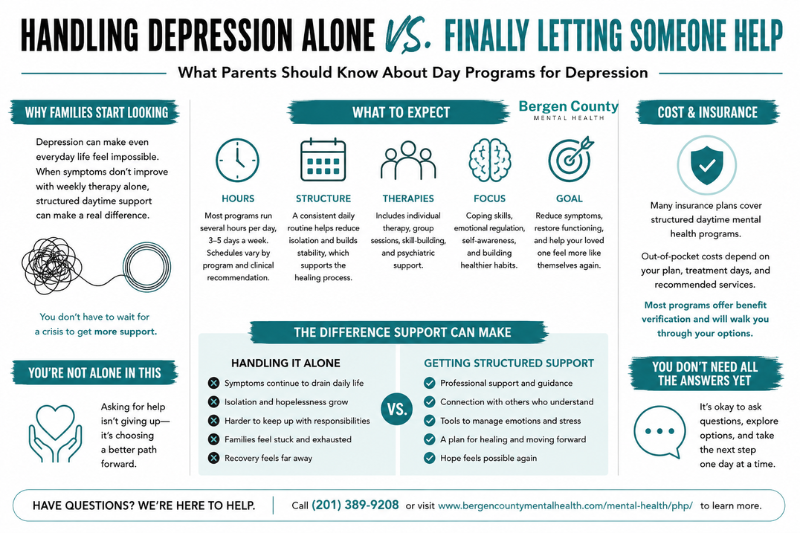
Most structured daytime mental health programs run several hours per day, multiple days a week. Some people attend morning sessions. Others participate in afternoon programming depending on clinical recommendations and scheduling availability.
The goal isn’t to “keep someone busy.” It’s to create enough support and structure that depression doesn’t get to run the entire day unchecked.
Because depression loves empty space.
Depression Can Make Basic Decisions Feel Impossible
Families sometimes hesitate because they think entering a higher level of care means things have become “serious enough.”
But many people who need more support are still technically functioning. They may still answer texts. Still go to work sometimes. Still smile at dinner.
Meanwhile, inside, they feel like they’re carrying wet concrete through every hour of the day.
That’s often where day treatment for depression becomes part of the conversation. Not because someone has failed. Because white-knuckling through severe emotional pain eventually stops working.
The Cost Fear Is Real — And It Stops A Lot of Families
Mental health care can feel financially intimidating, especially if you’ve already spent money on therapy, medications, or time away from work.
But here’s what many families discover after asking questions directly: insurance may cover part of structured daytime care depending on the plan and medical necessity.
The exact out-of-pocket cost varies based on:
- Insurance coverage
- Number of treatment days
- Length of care
- Clinical recommendations
- Additional psychiatric or therapeutic services
A good admissions team won’t pressure you. They’ll usually walk you through benefits verification, expected costs, and scheduling before anything begins.
That matters. Because people dealing with depression already feel overwhelmed enough.
What the Days Actually Tend to Look Like
A lot of parents picture something cold or hospital-like.
In reality, many programs feel more human than people expect.
A typical day may include:
- Individual therapy
- Group support sessions
- Psychiatric care or medication management
- Skill-building for anxiety, emotional regulation, and burnout
- Structured routines that help interrupt depressive isolation
For many young adults, structure itself becomes part of the healing.
Not rigid control. Rhythm.
There’s a difference.
Sometimes Parents Need Permission to Stop Carrying This Alone
Parents often become unofficial crisis managers without realizing it.
Monitoring moods. Watching sleeping patterns. Wondering if today will be better. Replaying conversations in their heads at 2am.
You can love your child deeply and still need support around them.
That doesn’t make you weak. It makes you human.
One of the hardest parts of depression is how quietly it convinces families to normalize suffering. Weeks turn into months. Months turn into years. Everyone adapts around the pain instead of addressing it directly.
A structured program can interrupt that cycle.
Looking for Support Doesn’t Mean Things Are Beyond Repair
This part matters.
Seeking more support does not mean your child is broken. It doesn’t mean you failed as a parent either.
Sometimes it simply means depression has grown bigger than weekly check-ins and occasional coping skills.
And honestly? There’s courage in recognizing that earlier instead of later.
If you’re exploring options, it may help to look into help in Reclaim Your Mental Health Journey or explore additional help in New Jersey for ongoing support and guidance.
You Don’t Have to Have Everything Figured Out First
Many families wait because they think they need certainty before making a call.
You don’t.
You’re allowed to ask questions before committing to anything. You’re allowed to not fully understand the system yet. Most people don’t at first.
Call (201) 389-9208 or visit our mental health support services to learn more about our mental health, php services.