


There’s a moment many parents describe the same way: something shifts, and you know this is more than a phase.
It’s quiet, but unmistakable. And suddenly, you’re trying to figure out what to do next.
If you’re here, you’re not alone—and you don’t have to figure this out by yourself. You can start by understanding your mental health treatment options, even if everything still feels uncertain.
What a Mental Health Crisis Can Actually Look Like
A crisis doesn’t always look dramatic. Sometimes it’s subtle, slow, and confusing.
You might notice:
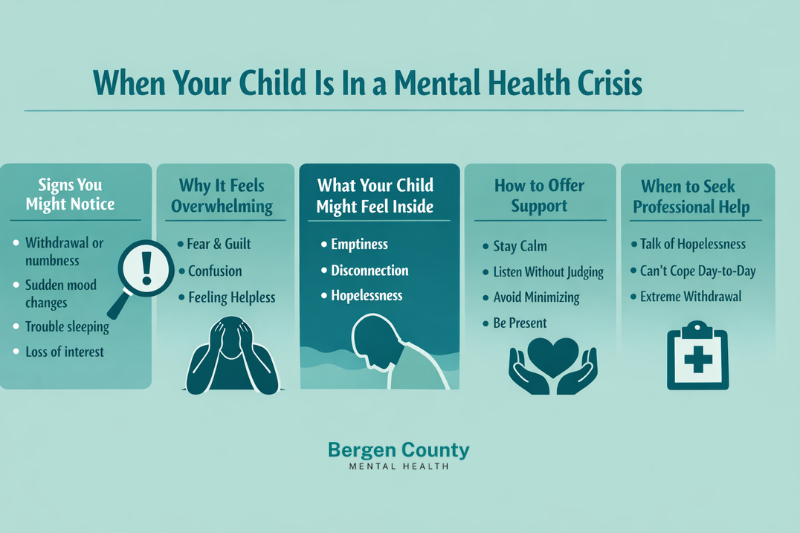
- Withdrawal from friends or family
- Sudden mood changes or emotional numbness
- Trouble sleeping—or sleeping all the time
- Expressions of hopelessness or feeling empty all the time
- Loss of motivation for things they used to care about
For many parents, the hardest part is not knowing if this is “serious enough.”
If your gut says something is wrong, that matters.
Why This Feels So Overwhelming (And Why That Makes Sense)
When your child is struggling, your instinct is to fix it. To step in, say the right thing, do the right thing.
But mental health crises don’t follow clear instructions.
You might feel:
- Panicked and unsure what’s urgent
- Guilty, wondering if you missed something
- Afraid of making it worse
- Exhausted from trying to hold everything together
None of this means you’ve failed.
It means you care deeply—and you’re facing something that doesn’t come with a manual.
What Your Child May Be Experiencing Internally
Even if they can’t explain it, many young adults in crisis describe a kind of internal shutdown.
It’s not always sadness.
Sometimes it’s emptiness. Disconnection. A sense that nothing feels real or worth the effort.
They may not have the words for it.
They may not even understand it themselves.
That doesn’t mean it isn’t real.
How to Respond Without Making Things Worse
You don’t need perfect words. You need presence.
Start here:
- Stay calm, even if you feel anything but calm inside
- Ask open-ended questions instead of pushing for answers
- Avoid minimizing (“you’ll be fine”) or overreacting
- Let them know you’re there—consistently, not just urgently
A simple, honest sentence can go further than anything rehearsed:
“I can see you’re struggling. I’m here with you.”
When It’s Time to Bring in Professional Support
One of the most important shifts is realizing you don’t have to carry this alone.
If your child is:
- Talking about hopelessness or not wanting to be here
- Unable to function day-to-day
- Becoming increasingly withdrawn or unstable
…it’s time to involve professionals.
There are different levels of care depending on what they need—from structured daytime care to more intensive, multi-day weekly support.
If you’re unsure where to start, exploring treatment options in New Jersey can help you understand what’s available and what fits your situation.
You Are Not Alone in This—Even If It Feels That Way
This kind of fear can feel isolating.
Other parents may not see what’s happening behind your doors.
Your child may not be able to explain what they’re going through.
But this experience is more common than it feels—and help exists in quiet, steady ways.
Sometimes the most important step is simply reaching out and saying: we need support.
A Steady Next Step
You don’t need to solve everything today.
You just need a next step that moves you and your child toward support.
Call (201) 389-9208 or visit mental health services in New Jersey to learn more about your options.
And if no one has told you this yet:
You’re doing more right than you think.